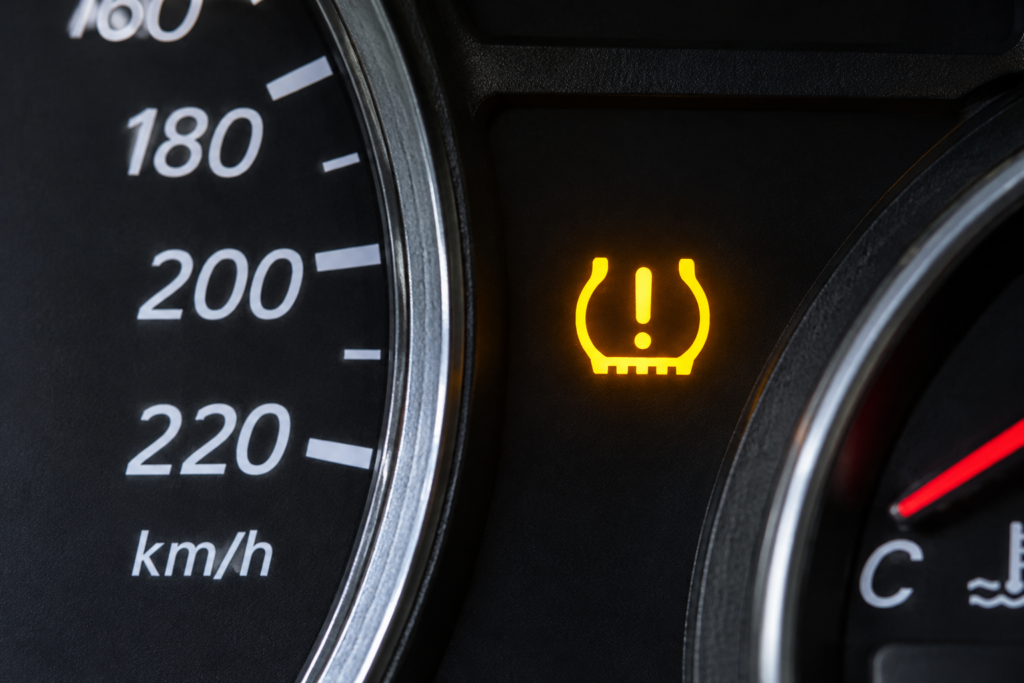
You get into your vehicle on a chilly November morning, start the engine and notice a yellow warning light on your dashboard. Your tires looked fine yesterday, so what’s changed?
As temperatures begin to fall in Leamington and across Essex County, it’s common for drivers to notice changes in their tire pressure. Even a relatively small drop in outdoor temperature can affect the amount of air pressure inside your tires.
The good news is that checking your tire pressure is a simple maintenance task you can handle before the colder winter weather arrives.
First, What Does the Tire Pressure Warning Light Mean?
Most modern vehicles are equipped with a Tire Pressure Monitoring System (TPMS). This system alerts drivers when tire pressure drops below a certain threshold.
If your warning light appears, there are several possible explanations:
- Cooler temperatures: Falling temperatures can cause tire pressure to decrease.
- A slow leak: A small puncture or leaking valve may allow air to escape gradually.
- Natural pressure loss: Tires can slowly lose air over time, even without damage.
- A tire-related problem: Damage or other issues may require professional inspection.
A warning light doesn’t automatically mean you have a flat tire, but it shouldn’t be ignored.
Transport Canada provides additional information about tire pressure monitoring systems and their role in vehicle safety.
How Much Tire Pressure Can You Lose When It’s Cold?
Here’s something many drivers don’t realize: tire pressure can drop approximately 1 PSI for every 5°C decrease in temperature.
That means a tire properly inflated during a warmer October afternoon could have noticeably lower pressure on a cold November morning.
According to Transport Canada’s tire inflation guidelines, maintaining the recommended tire pressure is important for vehicle safety, fuel efficiency and tire performance.
While you can’t control the outdoor temperature, you can stay ahead of these seasonal changes with regular pressure checks.
Your Tire Pressure Questions, Answered
Can I tell if my tires are underinflated just by looking at them?
Not always. A tire can be several PSI below its recommended pressure without appearing noticeably flat.
Using a tire pressure gauge is the most reliable way to check.
Should I add air when my tire pressure light comes on?
Start by checking the pressure in all four tires with a reliable gauge.
If a tire is below the vehicle manufacturer’s recommended cold inflation pressure, add air until it reaches the correct level.
If one tire is significantly lower than the others or continues losing pressure, have it inspected for a possible leak or damage.
Where can I find the correct PSI for my vehicle?
Your recommended tire pressure is usually listed on a sticker inside the driver’s side door jamb. You can also find it in your owner’s manual.
Don’t use the maximum PSI printed on the tire sidewall as your target pressure unless it matches your vehicle manufacturer’s recommendation.
Is it better to check tire pressure in the morning?
Checking your tires before driving is ideal because you’ll get a more accurate cold tire pressure reading.
If you’ve already been driving, wait at least three hours before checking when possible.
How often should I check my tires during fall and winter?
Check your tire pressure at least once a month and whenever outdoor temperatures change significantly.
It’s also a good idea to check before longer trips, particularly when travelling during colder weather.
Why You Shouldn’t Ignore Low Tire Pressure
Underinflated tires can affect more than your dashboard warning light.
When tire pressure is too low, your tires may experience increased rolling resistance, uneven tread wear and changes in handling.
Maintaining the recommended pressure helps support:
- Fuel economy: Proper inflation helps reduce unnecessary rolling resistance.
- Tire life: Correct pressure helps promote more even tread wear.
- Steering and handling: Tires perform more predictably when properly inflated.
- Everyday driving safety: Regular checks can help identify potential problems before they become more serious.
For drivers commuting around Leamington, travelling between Kingsville and Wheatley or using their vehicles for work, these small maintenance checks are worth making part of a regular routine.
If you’re catching up on seasonal maintenance, our End-of-Summer Car Care Guide covers other important vehicle checks, including batteries, wiper blades, brakes and filters.
A Few Tools That Make Tire Maintenance Easier
You don’t need an extensive collection of tools to monitor your tire pressure at home.
Tire Pressure Gauge
A digital or traditional tire pressure gauge makes it easy to check the pressure in each tire and compare it with your vehicle’s recommended PSI.
Portable Tire Inflator
A portable inflator allows you to add air when needed. It’s a convenient tool to keep in your garage or vehicle, particularly during months when temperatures fluctuate.
Tire Maintenance Accessories
Valve caps and other basic tire maintenance accessories are useful to have on hand for regular upkeep.
At Pete’s Paint & Parts, we offer a wide selection of automotive parts, tools and maintenance supplies for everyday drivers, DIY enthusiasts and local businesses.
If you’re unsure which tire maintenance products are right for your needs, our knowledgeable team can help you explore your options.
Don’t Stop at Tire Pressure: Get Ready for Winter
Checking tire pressure is a good starting point, but it’s only one part of preparing your vehicle for the colder months.
Before winter arrives, consider checking your battery, windshield wipers, lighting, fluids and other essential maintenance items.
For a more complete seasonal overview, read our Winterize Your Car in 10 Easy Steps guide.
Taking care of these tasks in November can help make the transition into winter driving much easier.
Visit Pete’s Paint & Parts in Leamington
Whether your tire pressure warning light has recently appeared or you’re simply getting ready for colder weather, having the right maintenance tools available can make a difference.
Stop by Pete’s Paint & Parts in Leamington for tire pressure gauges, automotive tools and vehicle maintenance supplies. Our knowledgeable staff can help you find the products you need to keep your vehicle ready for the road ahead.
Have a question about a particular product? Contact Pete’s Paint & Parts or visit us in-store.
Pete’s Paint & Parts
157 Talbot Street East
Leamington, ON N8H 1L8
519-322-2555
Your Local Carquest Auto Parts Store